Decoding Algorithmic Patterns Behind Withdrawal Timelines in Digital Asset Transfers for Portable Table Game Sessions
Elena Coleman · Aug 20, 2026
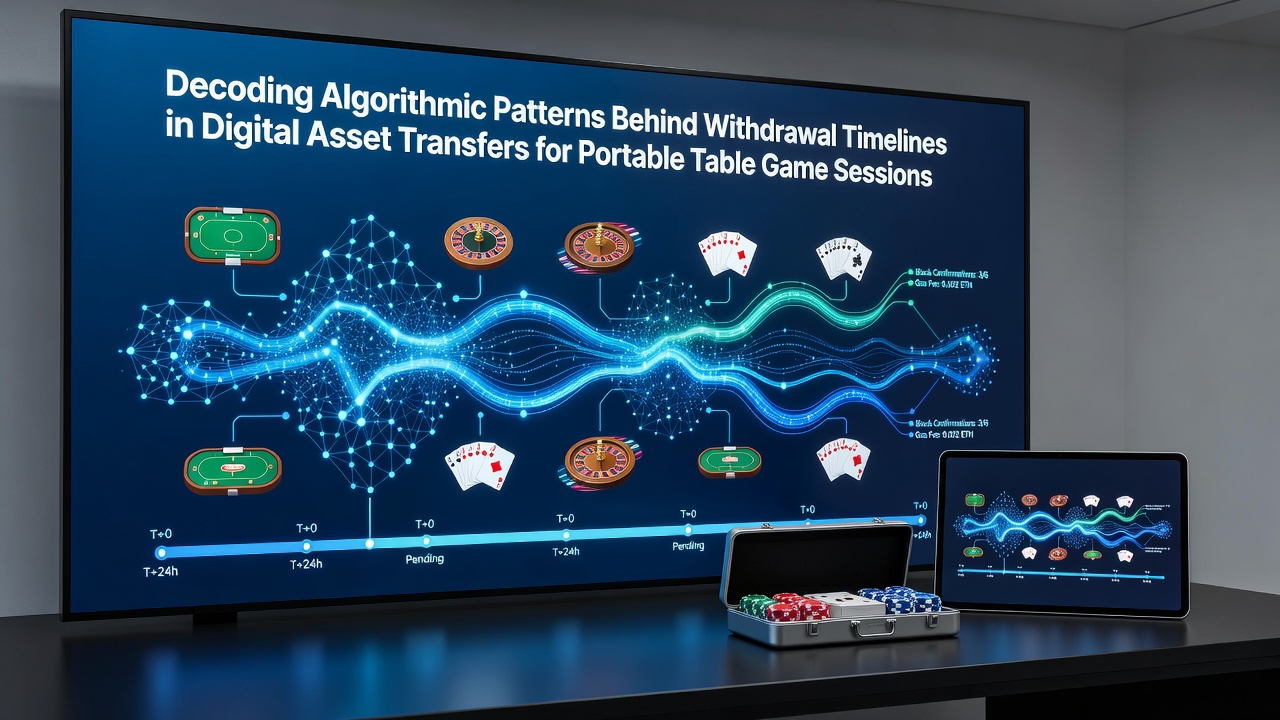
Decoding Algorithmic Patterns Behind Withdrawal Timelines in Digital Asset Transfers for Portable Table Game Sessions
Algorithmic patterns in withdrawal timelines for digital assets have drawn attention from analysts who track blockchain activity in mobile gaming environments, and these patterns emerge from the interaction between network protocols, smart contract executions, and user session data in portable table game applications. Researchers who examine transaction ledgers often identify recurring sequences where confirmation delays cluster around specific time intervals, particularly when multiple sessions overlap on the same blockchain network.
Core Mechanisms Driving Transfer Timelines
Digital asset transfers rely on distributed ledger confirmations that vary according to block production rates, and in the context of portable table game sessions these rates intersect with real-time betting data that triggers automated payout scripts. Observers note that algorithms designed to detect anomalous withdrawal requests insert additional verification layers when transaction volumes spike during peak mobile gaming hours, which extends the interval between request submission and final settlement. Data from network monitoring tools shows that Ethereum-based transfers, for example, average between 30 seconds and several minutes for initial confirmations, yet these figures stretch when gas prices fluctuate or when multiple table game sessions request simultaneous settlements.
Smart contracts governing in-game wallets execute conditional checks that include balance validation and session history reviews, and these steps occur before any asset leaves the platform's controlled addresses. Those who analyze transaction graphs find that certain patterns repeat when users switch between different portable devices mid-session, prompting the algorithm to flag the transfer for extra scrutiny to maintain consistency across device identifiers and IP sequences.
Network and Session Variables That Shape Outcomes
Portable table game sessions generate continuous streams of micro-transactions that feed into larger withdrawal calculations, and algorithms aggregate these streams to determine final amounts eligible for transfer. Congestion on Layer 2 scaling solutions can compress or expand timelines depending on batch processing schedules, while Layer 1 mainnets experience more pronounced delays during global usage peaks. Reports compiled by industry observers indicate that withdrawal requests initiated from regions with high mobile penetration often queue behind others when bandwidth allocation favors institutional validators over individual gaming accounts.

August 2026 brought protocol upgrades to several major networks that altered gas fee structures and batching rules, and these changes produced measurable shifts in average withdrawal durations for gaming platforms. Analysts tracking post-upgrade data recorded a reduction in median confirmation times for certain asset types, although variability remained high when session lengths exceeded typical thresholds or when cross-chain bridging was involved. The algorithms adapted by recalibrating their priority queues to account for the new fee markets, resulting in more predictable but still variable timelines.
Regulatory and Compliance Overlays
Compliance modules integrated into withdrawal algorithms cross-reference user activity against external watchlists maintained by financial intelligence units, and these checks add fixed latency that compounds with network delays. Authorities in multiple jurisdictions require platforms to retain records of digital asset movements tied to gaming sessions, which leads algorithms to pause transfers until automated reporting completes. A study released by the University of Sydney's Blockchain Research Institute documented how such compliance steps interact with session metadata to create distinct timeline clusters that differ from non-gaming transfers.
Similar patterns appear in reports issued by Singapore's Monetary Authority, where data on virtual asset service providers highlights the frequency of extended processing windows when portable gaming activity coincides with larger asset movements. The algorithms responsible for these decisions incorporate machine learning models trained on historical transaction sets, allowing them to predict and sometimes preempt delays by adjusting routing paths across available networks.
Observed Patterns in Real-World Deployments
One research team that reviewed aggregated platform logs identified a recurring cycle where withdrawals requested immediately after extended table game sessions showed shorter confirmation times than those submitted during active play. This occurs because session closure triggers final reconciliation scripts that prepare assets for immediate release once network conditions permit. Conversely, mid-session requests often encounter additional hold periods while the algorithm verifies that ongoing bets will not affect available balances.
Cross-border sessions introduce further variables as algorithms evaluate jurisdictional requirements in real time, and these evaluations produce additional processing steps when regulatory thresholds for reporting are crossed. Observers tracking these flows note that the resulting timeline distributions form characteristic curves that repeat across different gaming operators using similar backend architectures.
Conclusion
The algorithmic structures that govern withdrawal timelines in digital asset transfers for portable table game sessions combine network mechanics, compliance protocols, and session-specific data into predictable yet variable sequences. Continued monitoring of these patterns provides clearer insight into how blockchain performance and gaming application design jointly influence settlement speeds across global user bases.